Patellofemoral Replacement: The Forgotten Option for Kneecap Arthritis
Isolated kneecap arthritis doesn't always require a total knee replacement. Patellofemoral replacement targets just the kneecap compartment, preserving the rest of your knee and offering a faster recovery.
Understanding Patellofemoral Arthritis
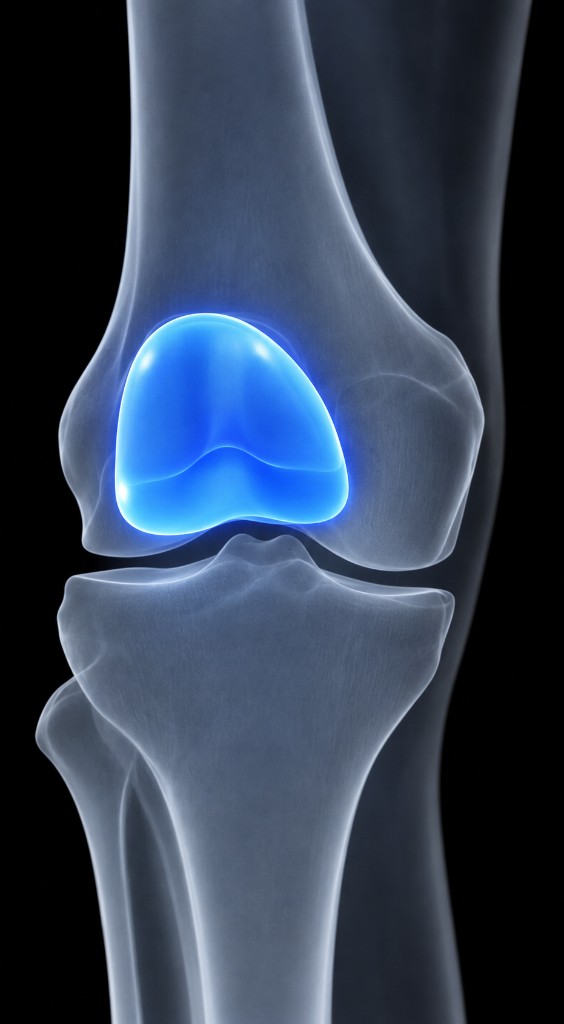
The patellofemoral joint is where the kneecap (patella) glides up and down the front of the femur in a groove called the trochlea. When cartilage in this specific compartment wears out — from prior trauma, trochlear dysplasia (a shallow groove), malalignment, or primary osteoarthritis — patients develop characteristic symptoms:
- Pain and crepitus (grinding) when climbing stairs, rising from a chair, or kneeling
- Pain in the front of the knee with prolonged sitting ("movie-sign")
- Swelling localized to the anterior knee
- Relatively preserved walking on flat surfaces (the medial and lateral compartments are still intact)
The key distinction is that medial and lateral knee compartments are normal — confirmed on weight-bearing X-rays and clinical exam. This is what makes isolated PFR possible.
How Patellofemoral Replacement Works
In a PFR, the surgeon resurfaces two components:
- The trochlea: A metal implant replaces the trochlear groove on the femur
- The patella: A polyethylene (plastic) button replaces the undersurface of the kneecap
The cruciate ligaments, collateral ligaments, medial compartment, and lateral compartment are all left completely intact. Unlike total knee replacement, the tibial plateau is not touched at all.
This is a genuinely smaller operation. PFR takes approximately 45–60 minutes; TKA takes 75–90 minutes. Blood loss is lower; most patients are home the same day.
The Evidence Base for PFR
PFR has an underappreciated evidence base. A 2019 study in the Journal of Arthroplasty following 240 PFR patients found 10-year implant survival of 87.5% when patients were properly selected — with satisfaction rates exceeding 85% (J Arthroplasty 2019;34(12):2966-2972).
The critical factor in PFR outcomes — as with all partial knee replacements — is patient selection. Studies reporting poor PFR outcomes share a common thread: patients who had arthritis in the medial or lateral compartments that was overlooked preoperatively, leading to progression and revision.
At my Miami practice, I use weight-bearing X-rays, clinical exam, and MRI to confirm compartment isolation before recommending PFR. When in doubt, I recommend TKA. When the anatomy supports PFR, I recommend it — because it is a genuinely better operation for the right patient.
Who Is a Candidate for Patellofemoral Replacement?
Include:
- Isolated patellofemoral osteoarthritis confirmed on radiographs (Merchant view, lateral view) and MRI
- Age typically 50–75 (though younger patients with post-traumatic PF arthritis may qualify)
- No significant medial or lateral compartment arthritis
- Intact cruciate and collateral ligaments
- BMI typically ≤ 40
Exclude:
- Tricompartmental arthritis
- Inflammatory arthropathy (rheumatoid, psoriatic)
- Significant coronal plane deformity requiring correction
- Trochlear dysplasia so severe that implant tracking cannot be corrected
Recovery and Return to Activity
Most PFR patients follow a similar trajectory to UKA:
Day of surgery: Walk with a cane or walker. Stairs before discharge. Weeks 1–2: Walking independently with a cane; progressive range of motion. Weeks 3–4: Most daily activities. Driving at 3–4 weeks for left knee or automatic, 4–6 for right. Month 2–3: Return to the sports you already did. Stair climbing without pain typically by 4–6 weeks.
The stair-specific benefit is often dramatic for PFR patients — stairs are the primary complaint before surgery, and improvement is typically the clearest marker of success.
Frequently Asked Questions
Q: How is patellofemoral replacement different from a total knee replacement? A: TKA resurfaces all three compartments and replaces both the femoral condyles and the tibial plateau. PFR resurfaces only the trochlea and patella. The tibial surface is untouched, and both cruciate ligaments are preserved.
Q: If my medial compartment starts to wear out, can I have a total knee replacement later? A: Yes. Conversion of PFR to TKA is well-described. The previous PFR components are removed, and a standard TKA is performed — similar to revising a UKA, it is more straightforward than revising a full TKA.
Q: Why don't more surgeons offer PFR? A: Historically, early PFR designs had higher failure rates due to poor implant design and inadequate patient selection. Modern implants with better trochlear geometry have significantly improved outcomes, but it takes time for practice patterns to change. This is an area where HSS experience and training matters.
Q: Is patellofemoral replacement covered by insurance? A: Yes. PFR is a covered procedure under Medicare and most private insurance plans. At UHealth, we verify coverage before your surgical scheduling appointment.
Educational information only. Individual candidacy, outcomes, and recovery timelines vary and require medical evaluation.
Written by
Dr. Steven Denyer, MD, MS
Harvard-trained joint replacement surgeon. Specialist in minimally invasive anterior hip replacement, and robotic partial knee and total knee replacement in South Florida.
Share
Keep reading
Partial Knee Replacement
Medial Partial Knee Replacement in Miami: When Only the Inner Compartment Is Worn
Medial partial knee replacement resurfaces only the worn inner compartment, preserving the ACL and healthy tissue. Learn about robotic-assisted UKA candidacy, recovery, and same-da
Read morePartial Knee Replacement
Partial Knee Replacement: Why Keeping Part of Your Knee Is the Better Choice
Partial knee replacement replaces only the damaged compartment of the knee while preserving healthy bone, cartilage, and ligaments. For the right candidate in Miami, this means a faster, more natural recovery.
Read moreReturn to Activity
Golf After Hip and Knee Replacement in Miami and South Florida
If you already golf and arthritis pain is limiting your game, hip or knee replacement is designed to send you back to the course without that pain. Learn how modern techniques supp
Read moreMiami Joint Replacement
Ready to take the next step?
Schedule a consultation with Dr. Denyer to review your imaging and build a personalized surgical plan.
Schedule a Consultation